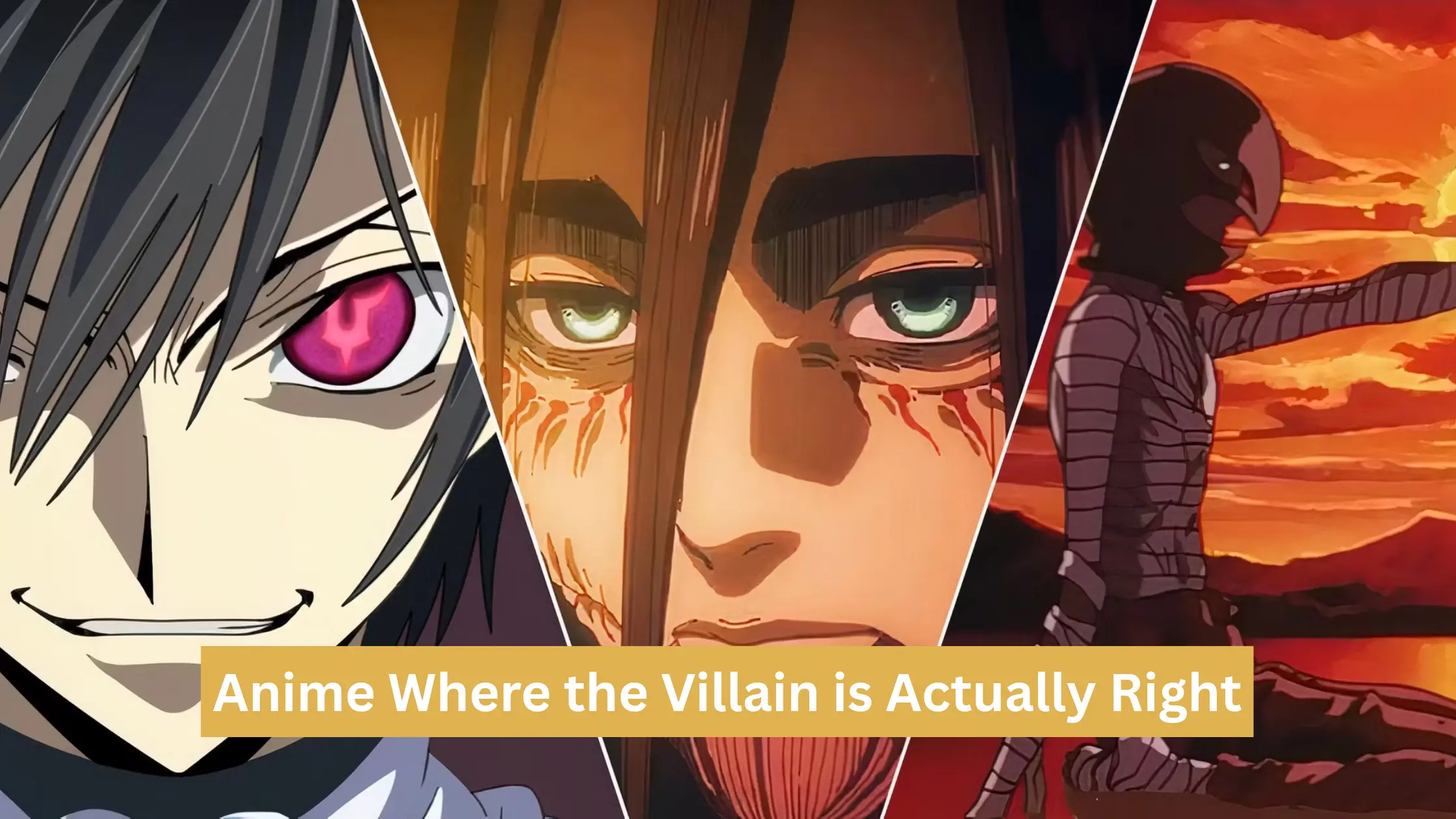
Not every anime villain is wrong. Some are cruel, selfish, or willing to cross unforgivable lines, but their basic argument can still make sense. That’s what makes these characters harder to dismiss than the usual villains who simply want power or destruction.
This list ranks 15 anime where the villain is actually right, or at least makes a case the hero can’t completely disprove. Each pick looks at the villain’s goal, the reasoning behind it, and why their argument can feel surprisingly convincing when you revisit the series.
Top 15 Anime Villains Who Were Actually Right
1. Lelouch vi Britannia (Code Geass)
Lelouch spends two seasons fighting a corrupt empire, then makes himself the ultimate villain so the entire world can unite against him and find peace after his death. The Zero Requiem is the most cited example of a “right” villain in anime for a reason. His plan worked. Global war ended because he took every last drop of hatred with him when he died.
The cost was every innocent person he killed to get there, plus the emotional destruction of everyone who loved him. The world he left behind was still better than the one he started in.
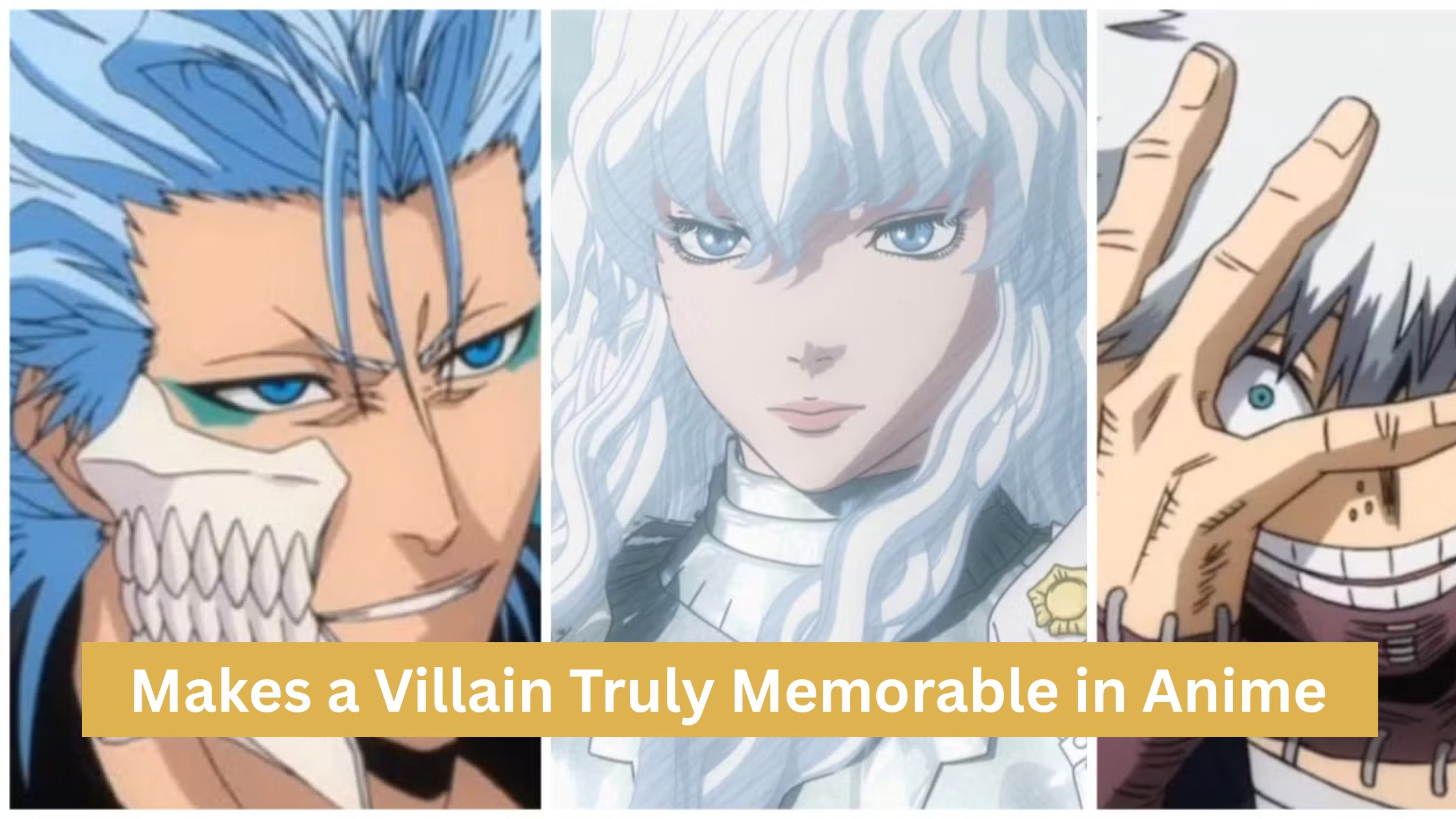
2. Stain, Chizome Akaguro (My Hero Academia)
Stain wanted to purge fake heroes who chased money and fame instead of actually saving people. He killed heroes who failed his purity test and paralyzed dozens more.
Later arcs of My Hero Academia confirm almost everything Stain said. Endeavor’s family abuse, the Hero Public Safety Commission’s cover-ups, the corruption of ranked hero culture, the abandonment of the Todoroki children. Stain’s diagnosis was correct. His method was mass murder, which is where the point falls apart.
3. Pain, Nagato (Naruto)
Nagato watched his village get destroyed as collateral damage in a war between the great shinobi nations. His conclusion was that the world would only stop hurting when everyone felt the same weight of loss. He dropped a nuclear-level attack on Konoha to prove it.
His speech to Naruto is the emotional peak of that arc. The cycle of hatred he described is real. Every ninja war in Naruto history was retaliation for the last one. Naruto’s answer was a promise to break the cycle in a different way.
4. Light Yagami (Death Note)
Light picked up a supernatural notebook and used it to execute criminals worldwide. Light’s actions dramatically reduce crime in the world of Death Note, at least according to the information presented in the story. Actual dictators surrendered. Wars slowed. In raw numbers, Kira’s world was measurably safer.
His villain arc was the godhood, not the goal of a world without crime. Light killed innocent detectives, manipulated and disposed of the people who trusted him, and slid from justice into pure ego within months.
5. Zeke Yeager (Attack on Titan)
Zeke wanted to end Eldian suffering by sterilizing his own people so the cycle of persecution would die out in one generation. The Marleyan world clearly treats Eldians as subhuman. The Restorationist arc showed no political solution was ever coming for his people.
Forced sterilization is horror. But Zeke’s read on why Eldians would never stop being hated was accurate, and the show never really argues otherwise. Eren’s ending confirmed it in the worst possible way.
6. Meruem (Hunter x Hunter)
The Chimera Ant King started as pure predator logic. Strong eats weak. His arc over the Palace Invasion turned him into something almost human, and his final scenes with Komugi show he’d moved past the philosophy he was born into.
Meruem was right that survival hierarchies exist. He was wrong that being at the top of one meant erasing the beings below. His death is one of the saddest moments in Hunter x Hunter because the villain had already stopped being one.
7. Kyubey (Puella Magi Madoka Magica)
Kyubey harvests the souls of magical girls to prevent the heat death of the universe. The trade is cosmically horrifying: thousands of children suffer so that trillions of future beings can exist. Pure utilitarian math.
Madoka’s whole arc is the argument that emotional consent matters more than utilitarian math. Kyubey is right about the numbers and wrong about what a person is worth. That tension is the whole show.
8. Scar (Fullmetal Alchemist: Brotherhood)
The Amestrian military committed genocide against Scar’s people during the Ishvalan War. State Alchemists were the executioners. Scar’s revenge quest against those same alchemists starts as pure retribution against people who deserve it.
His arc is about learning that even justified vengeance keeps the cycle going. What happened to Ishval is never in dispute. Scar was right about the crime. His path forward was where he had to change.
9. Suguru Geto (Jujutsu Kaisen)
Suguru Geto’s worldview collapses after years of watching jujutsu sorcerers risk their lives against curses created largely by the negative emotions of non-sorcerers. After Riko Amanai’s death and later experiences that deepen his resentment, Geto concludes that eliminating non-sorcerers would eliminate the source of curses. He concluded that curses come from non-sorcerers, so wiping out non-sorcerers ends the problem forever.
The Jujutsu Kaisen power system literally confirms his premise. Curses are born from negative human emotion. Sorcerers die fighting problems that regular people create. Geto’s philosophy has a working logic layer, which is why Gojo could never fully argue him out of it.
10. Donquixote Doflamingo (One Piece)
Doflamingo is a monster, a slaver, and one of the cruellest villains in One Piece. He’s also completely correct about the World Nobles. His flashback reveals the horror of Celestial Dragon culture from the inside. Later One Piece storylines continue to reveal more about the World Government, Celestial Dragons, and the inequalities built into the world order.
His speech in the Dressrosa arc about how the World Government operates in the shadows was mostly right. Fisher Tiger, Sabo’s Reverie arc, and the Egghead storyline all back him up. The villain saw the machine clearly. He also chose to become part of it.
11. Fisher Tiger (One Piece)
Fisher Tiger raided Mariejois and freed enslaved fishmen and humans alike. The world government branded him a pirate and a criminal. Every reader knew he was a liberator.
His mistake was refusing a human blood transfusion when he was dying, unable to accept help from the same species that had enslaved his people. It cost the Sun Pirates their leader far too early. His cause was right. His personal wound never fully healed.
12. Dabi, Toya Todoroki (My Hero Academia)
Dabi’s entire villain arc is revenge against Endeavor, his father, for years of abuse that no one stopped. The show does not treat this as unearned. Endeavor’s family abuse is on the page. The hero establishment’s tolerance of Endeavor’s methods is on the page.
Dabi’s public revelation broadcasts the Todoroki family’s darkest history to the world and burns Endeavor’s reputation to the ground. His rage was justified even if the civilians he killed to make his point were not.
13. Homura Akemi (Madoka Magica: Rebellion)
Homura loved Madoka so much that when Madoka gave up her existence to save every magical girl in history, Homura tore reality apart to bring her back. She became the villain of the Rebellion movie for one reason: she couldn’t accept a universe where Madoka wasn’t in it.
Debate about whether Homura was right splits the fandom to this day. She violated Madoka’s choice. She also refused to let a 14-year-old sacrifice herself forever. Both readings hold.
14. Shougo Makishima (Psycho-Pass)
Makishima lives in a society governed by the Sibyl System, which evaluates people’s psychological states and assigns crime coefficients that determine how they are treated by the authorities. People get executed for crimes they haven’t committed yet. Makishima’s answer was to burn the whole system down.
He kills people without hesitation and manipulates others into violence, but his critique of a world where machines decide who deserves to live cuts deep. Even the show’s heroes struggle to argue with the diagnosis. Psycho-Pass is one of the few anime where the government is more terrifying than the serial killer.
15. Sosuke Aizen (Bleach)
The history of Soul Society is also filled with uncomfortable compromises, including its treatment of the Quincy and the secrecy surrounding the Soul King. His plan was to kill the Soul King and reshape the balance of the three worlds.
His critique of Soul Society was sharper than any hero admitted. The Central 46 ran on ancient laws no one questioned. Captain politics were rotten. The Quincy massacre happened roughly 1000 years before the main story. Aizen was one of the only characters willing to say the system needed to burn, even if his own ego was the real engine of the plan.
What Their Arguments Have in Common
The villains on this list have one thing in common: they’re often right about the problem. Where they lose the heroes is in what they believe should be done about it.
Stain sees the corruption in hero society. Pain understands the cycle of revenge. Kyubey recognizes the larger cosmic problem behind magical girls. Scar has every reason to hate the system that destroyed his people. The heroes rarely argue that these problems don’t exist. They argue that the solution can’t justify the cost.
That’s what makes these villains so memorable. When a character is completely wrong, there’s nothing left to debate. But when they’re half right, you can disagree with their actions and still understand their point long after the series ends.
Where to Watch These Anime
Most of the shows on this list are available across major streaming platforms, but the exact catalog depends on your country and can change over time.
- Crunchyroll: Naruto, My Hero Academia, Hunter x Hunter, Jujutsu Kaisen, One Piece, Fullmetal Alchemist: Brotherhood, Attack on Titan, Psycho-Pass, and Bleach
- Netflix: Death Note, Code Geass, and Psycho-Pass
- Hulu: Puella Magi Madoka Magica, Attack on Titan, My Hero Academia, and Bleach
- Other services: Some titles may also be available through regional services or digital storefronts, depending on where you live.
Funimation is no longer listed because its streaming service officially shut down in April 2024, with its catalog moving to Crunchyroll.
Streaming rights can change without much warning, so check your local catalog before starting a series. A show available on Crunchyroll or Netflix in one country may be missing from the same service elsewhere.
Final Thoughts
Anime where the villain is actually right works because it makes the conflict harder to settle. You still want the hero to win, but part of you understands why the villain reached that conclusion in the first place. The best series on this list don’t give either side an easy answer.
If you’re choosing what to watch next, start with Code Geass or Fullmetal Alchemist: Brotherhood. Both give you characters whose choices can spark a real argument long after the final episode.
Read More
- Ranking the Best Anime Mothers
- The Role of Color Psychology in Anime Storytelling
- Why Best Side Characters in Anime Are More Popular Than Ever
- The Future of OP Main Characters in Anime
Frequently Asked Questions
1. Which anime villain is most often called right?
Lelouch vi Britannia is one of the most commonly cited examples. His Zero Requiem is a classic case of a character accepting the role of villain to achieve a larger political goal. His Zero Requiem plan is the textbook example of a villain who took on the world’s hatred to force a peace no politician could achieve.
2. Why do fans love morally grey anime villains?
A villain with a real point makes the story feel adult. The reward stops being the punch-out and becomes the argument. Shows like Code Geass, Death Note, and Attack on Titan built entire fanbases around this exact appeal.
3. Which anime has the best morally grey antagonist?
Attack on Titan, Code Geass, Bleach, and Hunter x Hunter are strong examples of anime that use morally complicated antagonists. Each of those series builds villains whose arguments the heroes can’t fully defeat.
4. Are anime with sympathetic villains harder to watch?
They can be. Shows like Madoka Magica and Death Note are emotionally heavier because you’re not just watching a fight. You’re watching a philosophical argument that doesn’t have a clean answer. The reward is a story that stays with you.