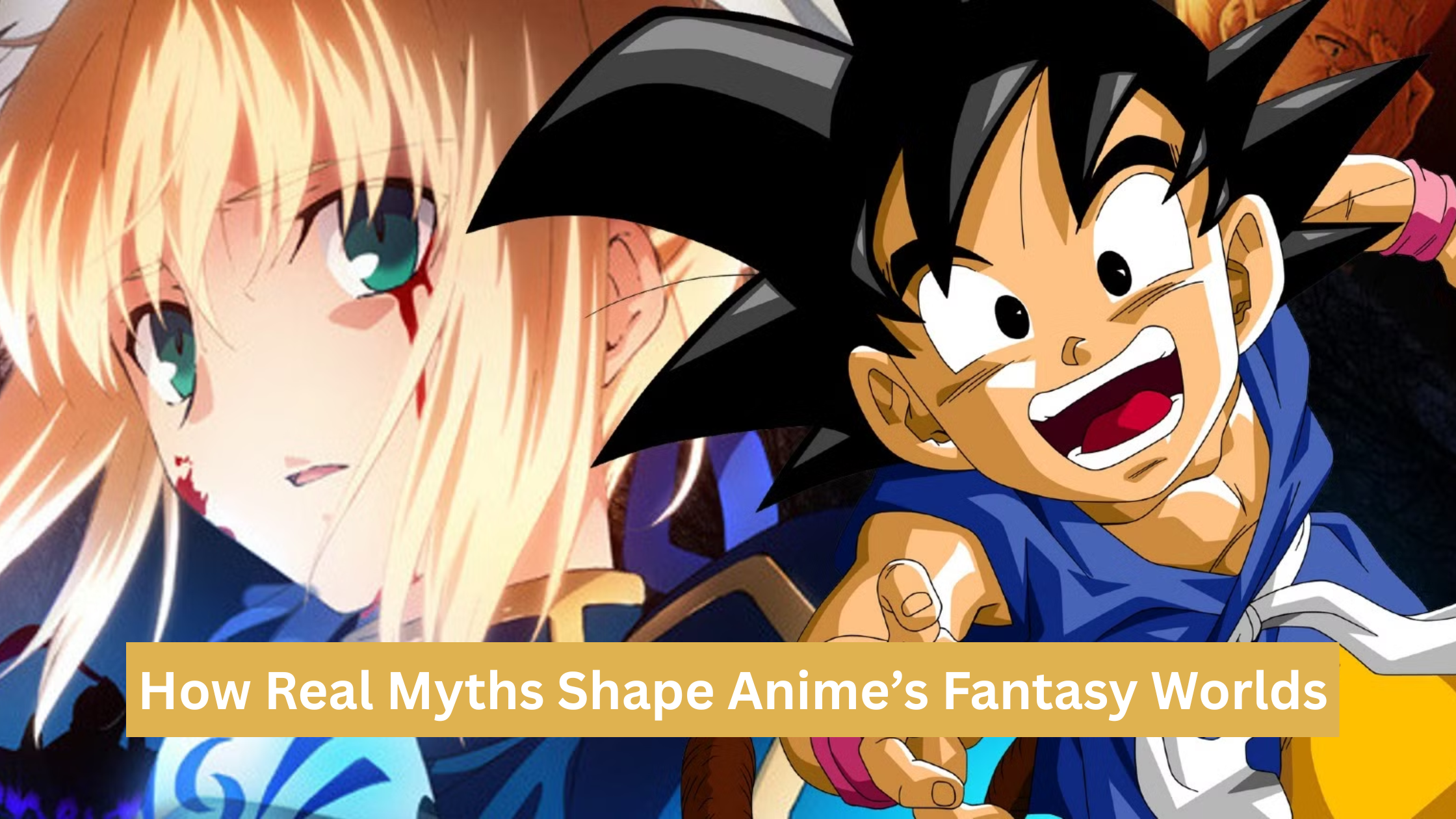
Anime often blurs the line between imagination and reality. Beneath its layers of magic, battles, and emotional arcs lies something ancient myth. From Japanese folklore to Greek legends, real-world myths breathe life into anime’s fantasy universes. They give depth to the worlds we fall in love with, and meaning to the struggles of the characters we admire.
Let’s take a journey through how myths around the world shape anime storytelling, influence character design, and create universes that feel larger than life.
Overview of Global Mythic Inspirations
Every culture has its own myths stories that explain who we are and why the world works the way it does. Anime, being a medium that celebrates creativity, borrows from all of them. Japanese creators have long been inspired by global mythology to build universes that feel familiar yet otherworldly.
Shows like Fate/Stay Night, Attack on Titan, and Magi: The Labyrinth of Magic are living proof that myth is far from forgotten. In these series, gods walk among mortals, heroes rise from ancient bloodlines, and creatures from folklore become symbolic of human fears and desires.
Japanese storytellers don’t just adapt myths — they reinterpret them. They weave pieces of truth and fantasy into a modern tapestry that resonates with today’s audience. Through this, anime connects us not just to fantasy, but to our shared human heritage.
Kami and Yokai from Japanese Folklore
Before foreign myths entered anime, Japan already had its own deep well of stories. The Shinto religion and centuries of folklore gave birth to kami (divine spirits) and yokai (supernatural beings). These entities represent everything from nature’s beauty to its dangers.
Anime like Spirited Away, Natsume’s Book of Friends, and Princess Mononoke capture these elements perfectly. Spirited Away, for example, transforms traditional kami into living, breathing characters a river spirit, a stink spirit, a faceless ghost. Each represents a lesson about greed, purity, and balance.
Similarly, Mononoke explores how yokai are born from human emotions guilt, anger, obsession showing how even the unseen world mirrors our inner one. These stories remind us that in Japanese culture, nature and spirit coexist. It’s not about good or evil, but harmony and imbalance.
By grounding fantasy in this spiritual belief, anime gives every creature and setting a soul.
Greek and Norse Warrior Parallels
Western mythology also plays a massive role in shaping anime’s fantasy frameworks. Greek and Norse myths, with their gods, demigods, and warriors, have deeply influenced how anime portrays conflict and destiny.
Take Saint Seiya an anime that practically worships Greek mythology. Each warrior represents a constellation and channels divine power to protect Athena. The storytelling structure mirrors the Greek idea of fate the belief that no hero can escape destiny, no matter how hard they fight.
Then there’s Vinland Saga, which reimagines Norse culture with emotional realism. Instead of glorifying war, it explores the burden of vengeance and the search for peace ideas rooted in Viking sagas.
Even Attack on Titan carries Norse undertones. The very name “Ymir” comes from Norse myth, where Ymir was the first being born from chaos. Just like in myth, power and destruction come hand in hand.
These Western parallels give anime a broader scope. They bridge Eastern spirituality with Western heroism, allowing fans around the world to connect through shared mythic archetypes.
Direct Anime References to Myths (Fate, Magi)
Some anime don’t just take inspiration from mythology they bring myths to life. Fate/Stay Night and Magi: The Labyrinth of Magic are perfect examples of direct reinterpretation.
In Fate, heroes from across time and legend from King Arthur to Gilgamesh are summoned as Servants to fight in a Holy Grail War. It’s a battle not just of strength, but of ideals. The series humanizes these figures, making even gods and kings relatable. Their motivations honor, love, or regret feel deeply human despite their divine origins.
Meanwhile, Magi reimagines Arabian legends. The story borrows names like Sinbad and Aladdin, but instead of retelling the old tales, it reinvents them. The anime creates an expansive world of magic, politics, and morality while using mythological characters as vessels for new ideas.
These shows succeed because they don’t copy myths they recontextualize them. They turn ancient epics into personal journeys that explore modern dilemmas.
Religious Motifs and Reinterpretations
Myth and religion often intertwine, and anime doesn’t shy away from exploring this delicate territory. Many creators use religious motifs to question morality, destiny, and the nature of godhood itself.
Consider Neon Genesis Evangelion. Despite its sci-fi setting, the show is filled with biblical imagery Angels, the Tree of Life, Adam and Lilith. But rather than retelling Christian theology, it uses these symbols to explore human loneliness and the fear of existence.
Another example is Death Note, where Light Yagami’s god complex mirrors the fall of Lucifer a once noble being corrupted by pride. The Shinigami (death gods) and the moral dilemmas surrounding power are a reflection of how humans misuse divine authority.
These religious reinterpretations give anime emotional gravity. They make viewers question not only what’s right and wrong but also what it means to play god.
How Myth Anchors Morality Lessons
At their core, myths are moral compasses and anime carries that tradition forward. Every time a hero confronts temptation or a villain seeks redemption, the roots trace back to mythology.
In Naruto, the Nine-Tailed Fox isn’t just a monster. It’s inspired by the kitsune of Japanese lore a spirit both mischievous and wise. Naruto’s journey to befriend and understand it symbolizes accepting one’s inner demons, a lesson straight out of ancient morality tales.
Similarly, Fullmetal Alchemist: Brotherhood uses alchemy as a moral metaphor. “Equivalent exchange” reflects the ethical principle found in myths across cultures that power always comes with sacrifice.
By anchoring fantasy in mythic morality, anime teaches without preaching. It allows viewers to learn through emotion rather than instruction.
Artistic Stylization of Divine Figures
One of anime’s greatest strengths lies in its ability to visualize the divine. Gods, spirits, and mythical creatures are not confined by religious imagery they’re reimagined with striking creativity.
Take Noragami, where gods walk among humans wearing street clothes. Or The Tale of the Princess Kaguya, where the moon people are ethereal and dreamlike. Even Bleach’s Soul Society borrows celestial hierarchy concepts, blending Japanese afterlife beliefs with modern aesthetics.
Through this stylization, anime artists turn myth into something relatable. Instead of distant deities, we see flawed, expressive beings who laugh, love, and struggle. The art amplifies their humanity, which is why even mythical figures in anime feel emotionally grounded.
Modern Anime Reinventing Ancient Stories
Modern creators continue to experiment with myths not as relics, but as creative foundations. Shows like Demon Slayer and Jujutsu Kaisen showcase how traditional lore can merge with modern storytelling techniques.
Demon Slayer draws from yokai and Shinto myths but adds layers of emotional realism. Each demon represents a human weakness envy, grief, obsession and every fight becomes a moral reflection.
Jujutsu Kaisen, on the other hand, modernizes the idea of curses. Instead of ancient demons, curses are born from human negativity a clever way to translate myth into contemporary psychology.
Even Blue Exorcist reimagines Christian demonology through the lens of family bonds and teenage rebellion. This shows how myths are not locked in time. They evolve with us, taking new forms while keeping their essence intact.
Fan Fascination with Myth Accuracy
Anime fans are a passionate bunch, and when it comes to mythological references, they pay attention. Entire online communities dissect every god name, spell, or creature design to see how accurate it is.
Why? Because myths create a bridge between fiction and history. When anime references real-world legends, fans feel a deeper connection they’re not just watching a story; they’re uncovering layers of cultural truth.
This fascination also sparks curiosity. Many viewers discover Japanese folklore or Greek legends through anime first. It becomes a gateway to learning about global mythologies.
In that sense, anime serves as both entertainment and education keeping ancient myths alive in a world that’s constantly moving forward.
Why Mythology Remains Crucial to Fantasy Anime
At its heart, anime thrives on emotion, symbolism, and imagination all qualities deeply rooted in mythology. Myths give structure to fantasy. They explain why power exists, why characters suffer, and why heroes rise.
Without myth, fantasy anime would lose its soul. Mythology grounds wild imagination in timeless human experience. Whether it’s a hero’s journey, divine punishment, or rebirth, these stories echo truths that never age.
Moreover, myths help creators explore existential questions: Why do we seek purpose? Why does pain shape us? Why does power corrupt? Every anime that touches these themes, knowingly or not, walks the same path as the myths that came before it.
Conclusion
Anime and mythology share the same heartbeat storytelling that reflects the human spirit. From the kami of Japan to the gods of Olympus and Asgard, these ancient tales continue to shape the way anime builds worlds, defines heroes, and explores morality.
Every time we watch a character defy fate, embrace darkness, or seek redemption, we’re witnessing a modern myth in motion. Anime doesn’t just borrow from mythology it revives it, turning old gods and forgotten tales into living symbols of human emotion.
That’s why, even as technology evolves and new genres emerge, mythology will always have a home in anime. Because in the end, myths remind us of what it means to dream and anime, more than any other medium, turns those dreams into worlds we can feel.
Read More:
Role of Gambling and Game Theory in Anime