
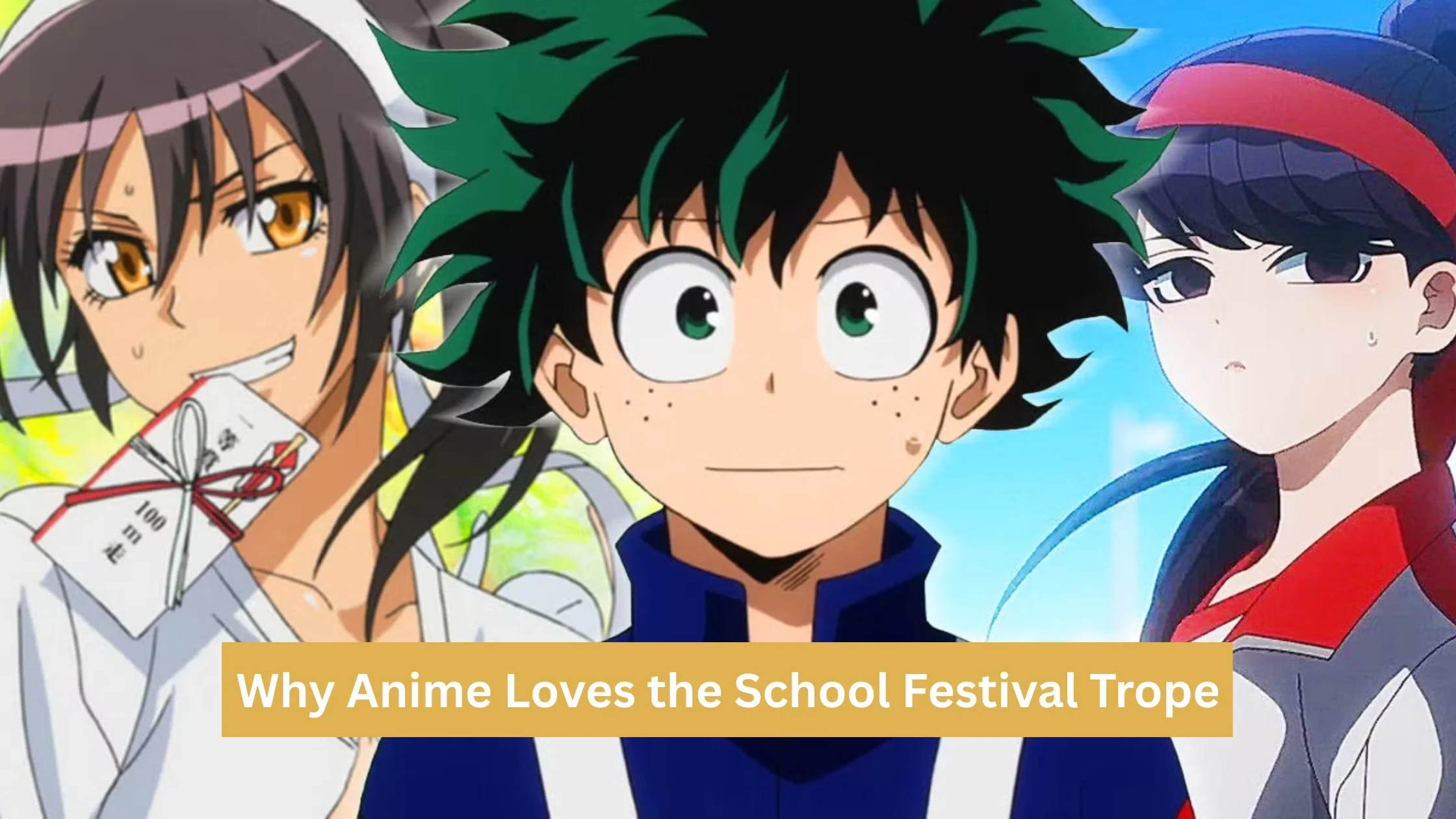
School festival trope in anime so often that they feel almost inevitable. No matter the genre—romance, slice of life, comedy, or even supernatural—there is a strong chance a school festival episode is waiting just around the corner.
At first glance, these events may seem like colorful filler. However, they serve a deeper narrative purpose. School festivals allow anime creators to bring characters together, heighten emotions, and reflect cultural traditions in a way that feels both exciting and familiar.
Moreover, school festivals act as shared emotional landmarks. Viewers instantly understand their significance even without long explanations. As a result, anime uses these events as storytelling shortcuts that still feel meaningful.
From heartfelt confessions to chaotic mishaps, the school festival trope continues to thrive because it blends realism with heightened drama.
To understand why anime returns to this setting so often, it helps to explore its cultural roots, narrative power, and emotional appeal.
Tradition of School Festivals in Japan
School festivals are not an anime invention. They are deeply rooted in Japanese education and culture. Known as bunkasai or gakuensai, these festivals are real annual events held by middle schools, high schools, and universities across Japan. Students plan them for months, taking responsibility for decorations, performances, food stalls, and exhibitions.
Because of this, school festivals represent freedom within structure. Students step away from routine classes and experience a brief period of creative control. Anime reflects this reality closely. Viewers see classrooms transformed into cafés, haunted houses, or art galleries. Hallways fill with laughter, music, and handmade decorations. This authenticity helps the trope feel grounded rather than exaggerated.
Additionally, festivals symbolize youth at its most expressive stage. They capture a moment when friendships deepen and individuality emerges. Anime uses this tradition to highlight growth and change. Since many viewers either experienced similar events or wish they had, school festival episodes naturally evoke nostalgia.
As a result, anime does not need to justify the festival setting. Its cultural importance already gives it meaning.
Catalyst for Character Development
One major reason anime loves school festivals is their ability to push characters out of their comfort zones. Ordinary school days limit interaction. Festivals remove those boundaries. Suddenly, shy characters must perform on stage. Reserved students must manage crowds. Conflicted friends must work together.
This shift creates natural opportunities for development. Characters reveal sides of themselves that rarely appear in classrooms. A quiet student becomes confident while running a booth. A strict character learns to loosen up. Even rivals find common ground when facing shared responsibilities.
Furthermore, festivals compress emotional arcs into a short timeframe. Pressure builds quickly. Deadlines approach. Expectations rise. As a result, characters are forced to confront feelings they might otherwise avoid. This makes emotional breakthroughs feel earned rather than rushed.
Because of this, many anime use festivals as turning points. After the event ends, characters often feel changed. Relationships shift. Goals become clearer. In narrative terms, the festival acts as a mirror, showing characters who they are and who they might become.
Comedy, Romance, and Conflict Potential
School festivals are narrative gold because they naturally invite comedy, romance, and conflict to exist side by side. In a single afternoon, anime can shift from lighthearted humor to emotional tension without feeling forced.
The festival environment encourages chaos. Costumes go wrong. Food stalls fail. Performances fall apart at the worst possible moment. These mishaps create organic comedy that feels playful rather than scripted.
At the same time, romance thrives in festival settings. The bright lights, evening atmosphere, and shared responsibilities create intimacy. Fireworks finales and quiet moments behind stalls often become stages for confessions.
Anime frequently uses these scenes to pause the noise and focus on emotions. A single glance or missed timing can carry more weight than pages of dialogue.
Conflict also emerges naturally. Rival classes compete for attention. Friends argue under pressure. Love triangles intensify when expectations clash. Because festivals are temporary, emotions feel urgent. Characters believe this moment may not return. That urgency raises the stakes and keeps viewers invested.
By combining humor, romance, and tension in one setting, school festivals allow anime to explore emotional complexity while keeping the tone accessible and engaging.
Animation Challenges
Although school festival episodes look effortless on screen, they present unique challenges for animation studios. Unlike regular classroom scenes, festivals demand dense visuals. Crowded hallways, decorated booths, stage performances, and nighttime lighting all require extra detail.
Animating crowds is particularly demanding. Each background character must feel alive without stealing focus. Movement needs to feel organic. Lighting shifts from daytime brightness to evening glow.
Lanterns, spotlights, and fireworks add layers of complexity. These details elevate the atmosphere but also increase production effort.
Sound synchronization is another challenge. Music performances, announcements, and ambient noise must blend smoothly. A festival that feels empty breaks immersion. Studios must balance visual spectacle with narrative clarity so viewers never feel overwhelmed.
Because of this, school festival episodes often stand out visually. When done well, they become some of the most memorable moments in a series. Studios use them as opportunities to showcase craftsmanship, knowing audiences expect something special.
Soundtrack Themes Unique to Festivals
Music plays a vital role in shaping the emotional tone of school festival episodes. Unlike everyday background tracks, festival soundtracks often feel celebratory, nostalgic, or bittersweet. Light guitar melodies, upbeat pop songs, and soft piano pieces appear frequently.
During daytime scenes, music supports energy and excitement. Performances and crowd chatter create a lively rhythm. As evening approaches, soundtracks slow down. Softer melodies take over. These shifts signal emotional transitions without needing dialogue.
Festival endings often feature memorable tracks. Fireworks scenes paired with gentle music leave lasting impressions. Even years later, fans associate certain songs with specific festival moments. This emotional anchoring strengthens audience attachment.
By using music strategically, anime transforms festivals into emotional peaks rather than simple events. The soundtrack becomes part of the memory itself.
Cross-Series Tropes and References
One reason school festivals feel so familiar in anime is how often they reference each other across series. Viewers quickly recognize shared elements. Maid cafés. Haunted houses. Idol-style stage performances. These recurring ideas create a shared language between anime and its audience.
Studios often play with expectations. Some series follow the trope faithfully. Others twist it for humor or subversion. A festival may fail spectacularly. A confession might be interrupted. Fireworks may never happen. These variations keep the trope fresh while honoring tradition.
References also appear as subtle nods. Background posters mimic famous anime festivals. Character costumes resemble iconic outfits from other series. These small details reward attentive viewers and strengthen community culture.
Rather than feeling repetitive, cross-series references build familiarity. They invite fans to compare moments and celebrate shared experiences across genres and generations.
Viewer Nostalgia and Expectations
School festivals tap into a powerful sense of nostalgia, even for viewers who never experienced one personally. Anime presents an idealized version of youth. Friendships feel intense. Time feels limited. Emotions feel pure.
Viewers approach festival episodes with expectations. They anticipate comedy early on. Emotional turning points near the end. Fireworks as a closing symbol. This predictability is comforting. It creates emotional safety while still allowing surprises.
For older fans, festivals remind them of missed chances and youthful excitement. For younger viewers, they offer something to look forward to. This emotional duality broadens the appeal.
Anime understands this balance well. It delivers what viewers expect while adding personal twists. That’s why festival episodes often become fan favorites.
Merchandising and Real-Life Events
School festival episodes also hold strong commercial value. They inspire merchandise tied directly to specific scenes. Character costumes. Festival-themed artwork. Limited edition figures. These items sell nostalgia as much as design.
Beyond merchandise, anime festivals influence real-life events. Schools and local communities recreate anime-style festivals. Collaborations with anime franchises appear at cultural events. Pop-up cafés mirror fictional booths.
Tourism also benefits. Fans visit locations inspired by anime festivals. This connection between fiction and reality strengthens audience loyalty and expands cultural reach.
The festival trope extends beyond the screen. It becomes an experience fans want to relive and participate in.
Studio Perspectives
From a studio viewpoint, school festival episodes serve multiple purposes. They showcase animation skill. They deepen character relationships. They often boost mid-season engagement.
Studios plan these episodes carefully. They place them at emotional peaks in the story. Marketing teams promote them heavily. Preview images focus on decorations and costumes.
Despite higher production demands, studios return to this trope because it works. Audiences respond emotionally. Discussions increase. Rewatch value remains high.
In many cases, festival episodes become defining moments for a series.
Festival’s Role in Anime Narrative Logic
Within anime storytelling, school festivals serve as natural turning points. They offer a believable reason for characters to step outside routine. Daily classroom life pauses. Emotions move forward. Decisions become unavoidable.
Festivals gather every character in one place. This allows unresolved tensions to surface organically. Confessions feel natural. Rivalries intensify. Friendships are tested. The setting justifies heightened emotion without breaking realism.
Narratively, festivals also act as emotional mirrors. Characters reflect on their growth while surrounded by celebration. A shy student realizes confidence. A lonely character finds belonging. The temporary nature of festivals reinforces urgency. Once the lights turn off, moments are gone forever.
Because of this, festivals function as narrative bridges. They connect earlier build-up with future consequences. Few tropes offer such efficient storytelling without feeling forced.
Conclusion
Anime loves the school festival trope because it blends culture, emotion, and storytelling efficiency into one unforgettable experience. Rooted in real Japanese tradition, festivals provide a familiar framework while allowing endless creative variation. They encourage character growth, fuel comedy and romance, and create moments viewers remember long after the episode ends.
More importantly, school festivals capture a universal feeling. The excitement of preparation. The fear of missed chances. The warmth of shared memories. Whether lighthearted or emotionally heavy, these episodes resonate across generations and cultures.
As anime continues to evolve, the school festival remains timeless. It reminds viewers why school stories matter. Not because of grades or rules, but because of the fleeting moments that shape who we become.