
School anime often appears simple on the surface. Hallways, classrooms, festivals, and friendships shape familiar settings.
Yet, within these ordinary environments, one institution consistently holds unusual power and narrative weight: the student council.
In anime, student councils are rarely just administrative groups. Instead, they become engines of drama, comedy, ideology, and character growth.
From authoritarian leaders to chaotic pranksters, student councils serve as mirrors of society and tools for storytelling. Let us explore how and why they play such an important role in school anime.
Origins of School Council Focus
The prominence of student councils in anime has deep cultural and narrative roots. In real Japanese schools, student councils exist primarily to organize events and represent student voices. However, anime expands this concept into something far more symbolic and dramatic.
Early school manga and anime used student councils as convenient authority figures. They provided structure within a limited school setting.
Writers needed characters who could influence rules, events, and conflicts without involving adults. Student councils filled that role perfectly.
Over time, this narrative shortcut evolved into a creative device. As anime storytelling matured, creators began exaggerating the power of councils.
They became miniature governments with elections, factions, and even secret agendas. This exaggeration allowed writers to explore themes like power, rebellion, and responsibility within a safe and relatable environment.
Additionally, post-war Japanese media often examined authority through metaphor rather than confrontation.
The student council became a symbolic stand-in for political systems, corporate hierarchies, or social order. By placing these themes inside a school, anime could explore serious ideas without losing accessibility.
As a result, student councils grew from background organizations into central pillars of school anime storytelling.
Types of Councils: Serious, Parody, and Everything Between
Not all student councils in anime operate the same way. Their tone often reflects the genre and intent of the story.
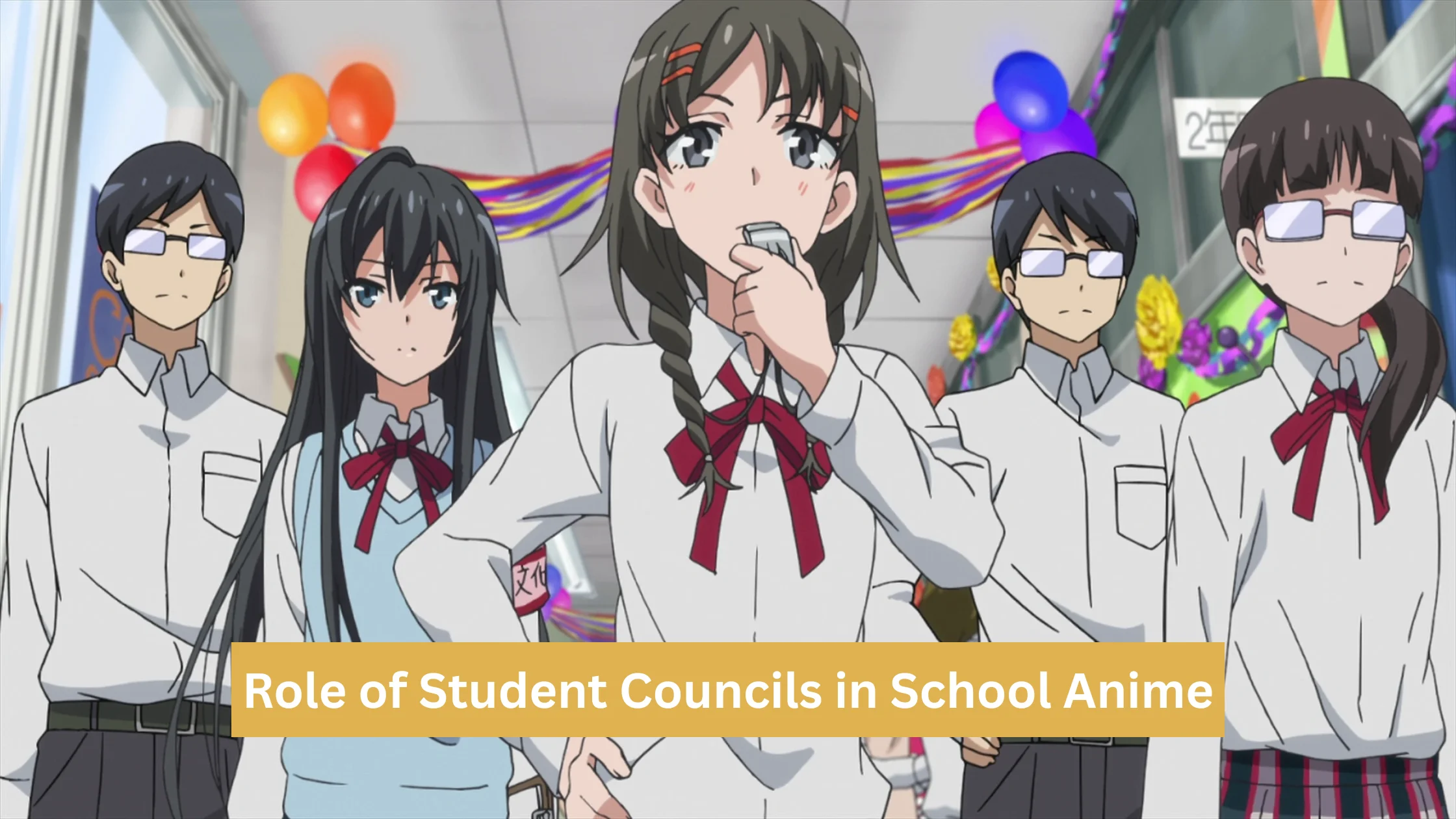
Some councils are serious and disciplined. These groups focus on order, tradition, and control. Members wear sharp uniforms and speak formally. Their presence creates tension and authority.
Others exist purely for parody. These councils exaggerate power to absurd levels. Meetings become chaotic. Rules make no sense. Humor drives every decision.
There are also balanced councils that blend realism with drama. These groups handle genuine responsibilities while dealing with personal conflicts.
Common council types include:
- Authoritarian councils that enforce strict control
- Idealistic councils focused on fairness
- Comedic councils built around chaos
- Secretive councils hiding deeper motives
This variety allows student councils to adapt to nearly any genre or tone.
Leadership Dynamics Within Student Councils
Leadership is often the emotional core of student council stories. The president usually represents authority, vision, or conflict. Their leadership style sets the tone for the entire council.
Some leaders rule through fear or discipline. Others lead through empathy and persuasion. This contrast creates natural tension among members.
Vice presidents often act as emotional counterweights. They may question decisions or secretly support rebellion. Secretaries and treasurers usually observe quietly, offering insight or humor.
Leadership struggles frequently involve:
- Power transitions
- Election conflicts
- Ideological clashes
- Personal insecurities
Through these dynamics, anime explores what it truly means to lead. Authority becomes a test of character rather than status.
The Council as a Microcosm of Society
Student councils often represent society in miniature. Each role reflects a social position. The president symbolizes leadership. Members represent different values, backgrounds, and ambitions.
Conflicts within councils mirror real-world issues such as class division, social pressure, and political compromise. Decisions affect the wider student body, just as policies affect citizens.
By shrinking society into a classroom scale, anime makes complex ideas approachable. Viewers understand the stakes immediately because the setting feels familiar.
Through council debates and power struggles, anime asks important questions:
- Who deserves authority?
- How should power be used?
- What happens when rules clash with morality?
These themes resonate beyond the school walls.
Common Story Arcs Involving Student Councils
Certain story arcs appear repeatedly in council-centered anime. These arcs help structure conflict and growth.
Popular arcs include:
- Election battles that test values
- Reform movements challenging old systems
- Corruption scandals within leadership
- External threats from rival schools
These arcs work because they combine personal drama with institutional change. Characters must confront not only others but themselves.
Even lighthearted series use these arcs to maintain momentum. Stakes feel high because decisions affect many characters at once. This makes councils powerful narrative engines.
Impact on Character Growth
Student councils in anime serve as more than just plot devices—they act as catalysts for meaningful character development.
By placing students in positions of authority, councils force characters to confront responsibilities earlier than they might in ordinary school life.
Members must constantly balance personal desires with collective duty, often leading to tension that drives growth.
For example:
- Shy or introverted characters gain confidence through public decision-making.
- Hot-headed or aggressive personalities learn restraint and diplomacy.
- Idealistic students face compromise and the complexity of real-world choices.
- Cynical characters may rediscover optimism or empathy through collaborative work.
The council environment accelerates growth by compelling interaction; characters cannot avoid conflicts, shy away from tough decisions, or remain in their comfort zones.
Over time, audiences witness clear transformations: emotional maturity, ethical awareness, strengthened friendships, and evolving world views.
These personal arcs often become the emotional backbone of a story, turning council experiences into formative milestones rather than mere background activity.
In this way, student councils shape characters in ways that resonate long after the anime ends.
Satirical Uses of Position and Power
Student councils in anime often become perfect tools for satire, especially when stories want to question authority without becoming heavy or preachy. By exaggerating power, anime highlights how leadership can slip into absurdity.
Councils create overblown rules, hold dramatic meetings, and treat minor school issues as world-changing events. Leaders may act like tyrants, complete with loyal followers and exaggerated speeches, turning everyday governance into theatrical comedy.
This satire feels effective because it mirrors real experiences. Viewers recognize similar power dynamics in schools, offices, or social groups.
The humor lands because it reflects familiar frustrations in a playful way. Instead of directly criticizing institutions, anime uses exaggeration to make audiences laugh first and think later.
Through these comedic portrayals, anime quietly questions blind obedience, rigid hierarchy, and outdated traditions.
By wrapping social commentary in humor, student council satire becomes both entertaining and thought-provoking. Laughter becomes the gateway to understanding how power should and should not be used.
Cross-Genre Council Stories
Student councils in anime rarely stay confined to slice-of-life storytelling. Instead, they adapt smoothly across multiple genres, proving their versatility as narrative devices.
In action-oriented school anime, councils often function as tactical centers, planning confrontations or enforcing rules with near-military precision. Their decisions raise the stakes and give structure to chaotic conflicts.
Romance anime, on the other hand, transforms councils into emotional meeting points. They become safe spaces where relationships grow, secrets surface, and personal growth unfolds through everyday interactions.
Meanwhile, psychological thrillers portray councils as shadowy power structures. These versions emphasize manipulation, control, and hidden agendas, turning student leadership into a source of unease.
Fantasy and supernatural school settings push this idea further by granting councils mystical authority or symbolic dominance over the world. Even sports anime use councils to oversee tournaments and resolve rivalries.
This genre flexibility highlights why student councils endure. They can shift tone, scale, and meaning without losing relevance, making them one of anime’s most adaptable storytelling tools.
Viewers’ Cultural Perceptions
Student councils in anime are perceived very differently depending on cultural background. For many international viewers, these councils appear exaggerated, theatrical, or even unrealistic.
The dramatic authority, intense elections, and near-political power structures often feel like playful fantasy rather than reflection.
As a result, global audiences tend to enjoy councils as entertaining symbols of anime excess and creativity.
However, Japanese viewers often recognize familiar cultural elements beneath the spectacle. Student councils reflect values tied to responsibility, hierarchy, and group harmony within school life.
While anime amplifies these traits for storytelling, the foundation remains grounded in real student experiences. This creates a subtle layer of social commentary that domestic audiences intuitively understand.
The contrast between these perspectives gives council-focused anime a unique strength. One audience reads symbolism and critique, while another enjoys style and drama. Over time, this dual interpretation has helped student councils become iconic within anime culture.
They represent school life through a distinctly anime lens while still tapping into universal ideas of leadership, identity, and belonging.
Council Archetypes in Anime
Student council anime often relies on familiar character archetypes to establish dynamics quickly. These archetypes act as narrative shortcuts, allowing viewers to understand relationships and power structures without lengthy explanations.
However, their effectiveness lies not just in repetition but in how they are explored and sometimes subverted.
Common student council archetypes include:
- The strict president, who values order, tradition, and control, often masking personal vulnerability behind authority
- The calm strategist, typically the vice president or advisor, who balances logic with quiet influence
- The energetic wildcard, unpredictable and emotional, bringing chaos but also honesty into the group
- The silent observer, who appears detached yet often holds the most insight or hidden motivation
While these roles feel familiar, strong anime rarely leave them flat. Over time, the strict leader may question their rigidity. The strategist may struggle with moral compromise.
The wildcard often reveals emotional depth, while the observer steps into decisive action.
By allowing archetypes to grow and contradict expectations, anime transforms simple character roles into compelling personalities. This evolution keeps council-based stories engaging and emotionally grounded.
Conclusion
Student councils in school anime are far more than organizational tools. They are reflections of society, power, and personal growth wrapped inside a familiar setting.
Through authority, satire, and conflict, they allow anime to explore complex themes without losing emotional accessibility.
Whether serious or comedic, realistic or exaggerated, student councils continue to shape school anime narratives.
They challenge characters, entertain viewers, and transform ordinary classrooms into stages for meaningful storytelling. As long as school anime thrives, student councils will remain at its heart.