
Introduction
If you’ve ever watched anime and thought, “That town looks too real to be made up,” you’re not alone. Many of the best anime settings are inspired by real places in Japan — from quiet countryside shrines to the bustling neon streets of Tokyo. The connection between anime and real-world Japan runs deep, shaping everything from background art to story mood.
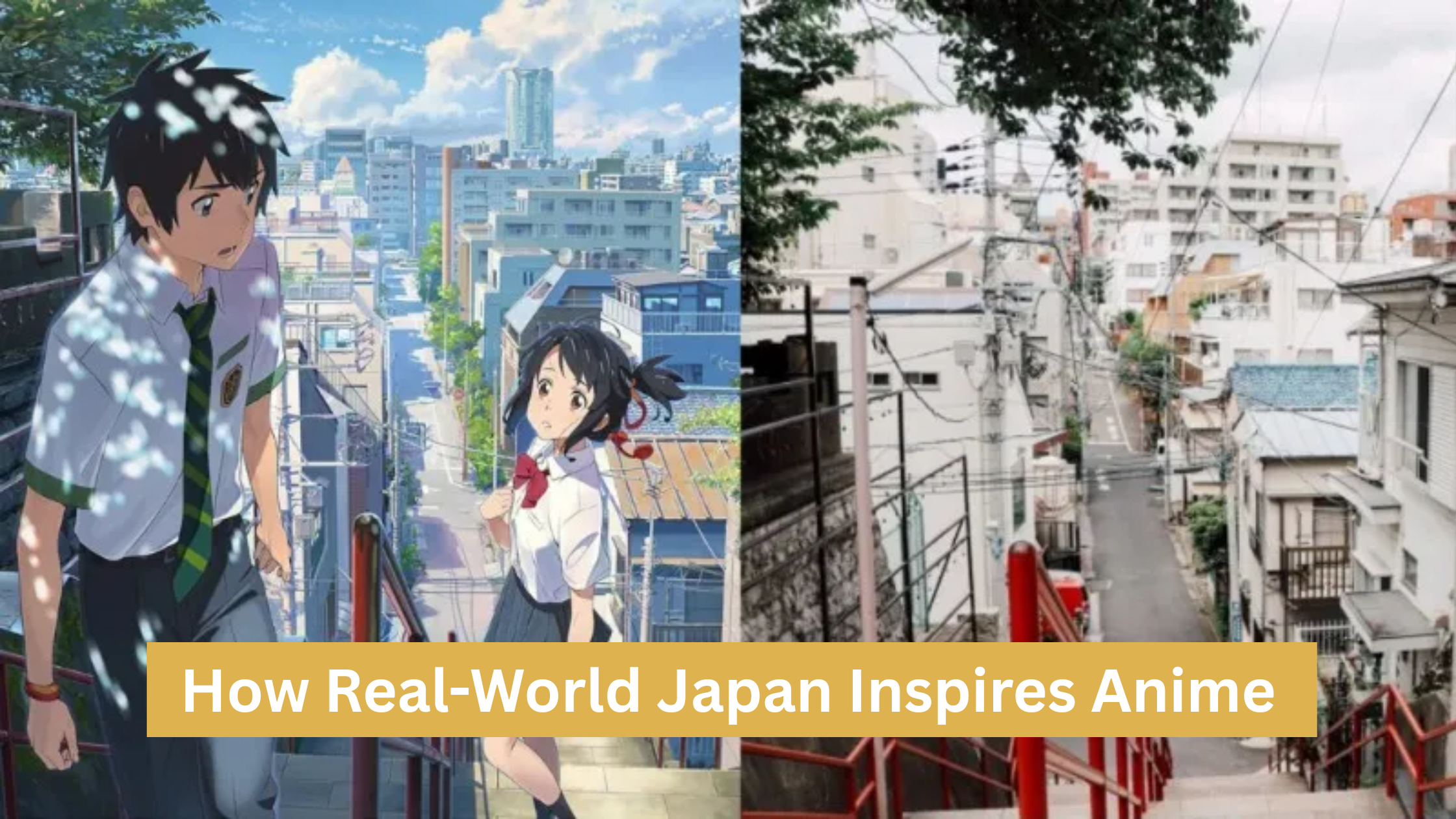
This blending of reality and imagination gives anime its unique warmth and authenticity. Whether it’s the coastal serenity of “Your Name” or the traditional streets of Kyoto in “Inari Konkon Koi Iroha,” these locations don’t just set the stage — they tell their own story. Let’s explore how Japanese culture, spirituality, and landscapes breathe life into the worlds we love.
Role of Location Scouting in Anime Production
Before a single frame is drawn, anime creators often embark on real-world adventures — known as location scouting or seichi junrei (holy site pilgrimage). Studios like Kyoto Animation and CoMix Wave Films send teams to visit towns, temples, and landmarks to capture the soul of a place.
Directors take hundreds of photos, observe how light falls during the day, and even record ambient sounds — footsteps on gravel, cicadas at dusk, the hum of vending machines. These real-life details later guide animators in building scenes that feel familiar yet magical.
For example, the creators of Your Name visited Hida City and Shinjuku’s Yotsuya district extensively to ensure every building and alley felt authentic. Similarly, Anohana perfectly mirrors Chichibu’s quiet rural charm. It’s this blend of artistry and research that allows anime to make fictional stories feel emotionally grounded in reality.
Famous Anime Spots Fans Can Visit
Anime tourism has become a massive trend in Japan. Fans travel across the country to visit real-life locations featured in their favorite shows, known as anime pilgrimage spots.
Some of the most famous include:
- Lake Suwa in Nagano, which inspired Your Name’s Itomori town.
- Washinomiya Shrine in Saitama, made popular by Lucky☆Star.
- Oarai Town in Ibaraki, now synonymous with Girls und Panzer.
- Kamakura’s Enoshima Electric Railway (Enoden Line), featured in Slam Dunk and Tari Tari.
What’s fascinating is how these places transform after being animated. Local tourism often spikes, with cafes selling themed menus and train stations displaying character posters. The bond between anime and real geography goes beyond fiction — it becomes a shared experience between creators and fans.
Cultural Festivals in Slice-of-Life Settings
If there’s one thing anime captures beautifully, it’s the spirit of Japanese festivals. From the fireworks in Clannad to the summer fairs in The Melancholy of Haruhi Suzumiya, festivals aren’t just background color — they’re windows into community life.
In real Japan, festivals (matsuri) celebrate everything from local gods to seasonal changes. Anime often reimagines these scenes to convey nostalgia, youth, and fleeting happiness — the essence of mono no aware, a Japanese term for the bittersweet awareness of life’s impermanence.
The lantern-lit stalls, cotton candy, yukatas, and fireworks reflect a cultural heartbeat. These sequences connect global viewers to the warmth and rhythm of everyday Japan — reminding us that behind the battles and fantasy worlds, anime often celebrates something deeply human.
Influence of Post-War Urban Japan
Modern anime wouldn’t look the way it does without the post-war transformation of Japan. After World War II, rapid urbanization reshaped the country’s identity — old temples stood beside neon-lit skyscrapers, and quiet traditions coexisted with modern technology.
Anime reflects this duality vividly. Works like Akira (1988) and Ghost in the Shell present futuristic Tokyo as both a technological marvel and a reflection of human anxiety. The decaying alleys, overcrowded trains, and glimmering towers tell stories of progress and loss.
Even in slice-of-life shows, you can feel this tension between nostalgia and modernization — like in Tokyo Magnitude 8.0 or Erased, where cityscapes become emotional landscapes. These settings capture a nation constantly evolving, torn between preserving its past and embracing its future.
Shinto and Buddhist Spiritual Motifs
Spirituality plays a quiet but powerful role in Japanese storytelling. Shinto and Buddhist themes shape how many anime worlds feel alive, sacred, and interconnected.
In Shinto belief, spirits (kami) inhabit all things — from rivers and trees to forgotten shrines. Anime like Spirited Away and Natsume’s Book of Friends turn these beliefs into vivid narratives where nature and spirits coexist. Every torii gate or forest path reflects Japan’s reverence for the unseen.
Meanwhile, Buddhism’s focus on karma, rebirth, and enlightenment can be found in anime like Death Parade and Mushishi. These stories use spiritual ideas not as religion, but as philosophical frameworks to explore morality and human emotion.
By blending these two traditions, anime builds worlds that feel both mystical and deeply rooted in Japan’s cultural soul.
Modern Cityscapes vs Fantasy Reinterpretations
Japan’s cities — especially Tokyo, Osaka, and Yokohama — serve as endless inspiration for anime artists. From Shibuya’s crosswalks to Akihabara’s neon glow, every detail tells a story. But anime often takes these cityscapes a step further — reimagining them through fantasy lenses.
Shows like Paranoia Agent and Psycho-Pass turn familiar urban life into psychological battlegrounds. Meanwhile, Tokyo Revengers transforms gang culture into emotional time-travel drama. Even in magical worlds like Cardcaptor Sakura or Jujutsu Kaisen, the city’s rhythm remains central.
This contrast between realism and reinterpretation defines much of anime’s visual style. Creators use recognizable backdrops to ground fantasy in emotional truth — a technique that allows audiences to believe the unbelievable.
Studio Ghibli’s Real-World Inspirations
No discussion about real-world inspiration in anime is complete without Studio Ghibli. Hayao Miyazaki and his team are masters at turning everyday Japan into worlds of wonder.
For instance:
- My Neighbor Totoro draws heavily from rural Saitama and Tokorozawa, capturing postwar countryside nostalgia.
- Spirited Away was inspired by traditional ryokans (inns) and Edo-period bathhouses.
- Princess Mononoke mirrors Yakushima Island’s ancient forests, a UNESCO World Heritage Site.
Ghibli’s genius lies in making the ordinary extraordinary. Instead of inventing distant worlds, they elevate familiar ones — blending hand-painted realism with childlike imagination. The studio’s attention to regional detail has even inspired eco-tourism, as fans explore the landscapes that shaped Miyazaki’s timeless tales.
Tourism Impact from Anime Pilgrimages
The phenomenon of “anime pilgrimage tourism” has become an economic and cultural force in Japan. Towns once known only to locals now attract thousands of visitors annually, thanks to anime exposure.
For example, after Lucky☆Star aired, Washinomiya Shrine saw a tenfold increase in visitors during New Year festivals. Similarly, Your Name’s Hida and Gifu Prefecture saw tourism jump by over 30%. Even remote areas like Oarai (for Girls und Panzer) have built lasting tourism economies around anime fandom.
Local governments now collaborate with studios, offering themed maps, limited-edition merchandise, and public art installations. These pilgrimages not only boost the economy but also preserve cultural heritage, as fans engage respectfully with local traditions and history.
Ethical Perspectives on “Location Anime”
While anime-inspired tourism brings joy and revenue, it also raises ethical questions. Not all towns are ready for sudden global attention — increased foot traffic can strain local communities or disrupt private spaces.
Some fans unintentionally cross boundaries, entering schools or homes seen in anime scenes. Studios and tourism boards now emphasize “respectful pilgrimage,” urging visitors to treat locations as living communities, not just photo backdrops.
Additionally, creators must consider how they portray real places. Romanticizing rural decline or urban decay can unintentionally misrepresent local struggles. The best productions balance homage with authenticity, ensuring the setting feels celebrated, not exploited.
Balancing Realism and Stylization
One of anime’s greatest strengths is its ability to blend realism with artistic liberty. While backgrounds may be photo-accurate, the emotional tone — lighting, color, atmosphere — is often exaggerated to heighten feeling.
Directors use pink sunsets, shimmering city lights, or overgrown shrines not for accuracy but for emotional storytelling. In essence, anime isn’t trying to copy Japan — it’s trying to capture how Japan feels.
This stylization allows artists to express nostalgia, loneliness, or serenity in visual form. Shows like 5 Centimeters per Second or A Silent Voice show us familiar streets bathed in poetic melancholy — transforming the real into something transcendent.
Conclusion
The magic of anime lies in how it turns every corner of Japan into a story worth telling. From sacred shrines to subway stations, every place holds memory, meaning, and emotion. The real-world Japan behind anime isn’t just a backdrop — it’s a living character that evolves with each generation of artists.
Whether you’re tracing Shinkai’s railways, exploring Ghibli’s forests, or wandering Kyoto’s temples, one thing becomes clear: anime doesn’t escape reality — it celebrates it. Through art, emotion, and imagination, it reminds us that the ordinary world around us can be the most extraordinary setting of all.